

Tuesday, June 1, 2010

Monday, May 31, 2010
I made a fantastic dinner tonight after almost a whole week of having no appetite (I think due to stress and the fact that I had a bad cold) I thought I would save half of it for breakfast tomorrow, but managed to eat it all! I made fish (from dried) in a sauce of tomato, onion, garlic, and carrot. Then I made some matembeli (delicious and healthy greens) and I managed to eat it all before the rice finished cooking (it’s still cooking now). Sometimes if I have leftover rice I boil it with milk for breakfast. (I have Nido – powdered milk – which is expensive but. . . necessary)I am glad to have my appetite back as my avocado a day diet probably wouldn’t have gone over well after the first week.Anyways, I know, again, it has been awhile. I have had some personal things going on, which are still unresolved, but I figured it was good time to let you in on how things are going.
My Easter I spent again with Flora and her family. It was subdued because of some family problems she was having, but I was happy to be able to go house to house to visit other neighbors in her subvillage. I was secretly happy that we didn’t manage to find milk so I didn’t have to bake cake, because I kindof didn’t feel like it. After cooking all day on Christmas and feeling like I missed out on visiting and being with people, I was ready for a holiday of being a ‘guest’ instead of the host.
The break of Easter along with the activity of it being rainy season (EVERYBODY IS FARMING EVERY DAY ALL DAY) put a long strange gap in my work routine. It gave me some time for a much needed rest, and to readjust my project schedule and visit people and reevaluate needs.
Flora promised there would be tons of dancing at the send off, but the sad thing is the send off is at the home of the parents, who now live a day and a half trip away from their birthplace (Marangu) – a day and a half and very expensive trip away, and there’s no way I (or Flora) can make it.
My Easter I spent again with Flora and her family. It was subdued because of some family problems she was having, but I was happy to be able to go house to house to visit other neighbors in her subvillage. I was secretly happy that we didn’t manage to find milk so I didn’t have to bake cake, because I kindof didn’t feel like it. After cooking all day on Christmas and feeling like I missed out on visiting and being with people, I was ready for a holiday of being a ‘guest’ instead of the host.
The break of Easter along with the activity of it being rainy season (EVERYBODY IS FARMING EVERY DAY ALL DAY) put a long strange gap in my work routine. It gave me some time for a much needed rest, and to readjust my project schedule and visit people and reevaluate needs.
Also, I was finally able to plant my garden which already had some healthy matembeli and lemongrass, as well as some american sweetcorn and both tanzanian beans and american stringbeans which are well on their way to bearing fruit now. I have to say that the Tanzanian beans (which they are calling soybeans but I don’t believe they are) are so much happier and healthier than the stringbeans and I can finally have proof to back my claim that me providing seeds from America will not help their gardens. (although I do give some seeds to every person who comes to me to show me they have dug a permaculture garden, they are mostly of tanzanian origin)
But back to my garden, I have now added hot and bell peppers, tomatoes, watermelon, cantelope, cucumber, carrots, eggplant (though they are still tiny and pathetic little sprouts), and Chinese greens (they call them chinisi pronounced chai-nee-zee) which are eaten cooked and rather yummy. I also have a bed which I just put some zinnia and portulaca seeds, as well as ornamental sunflowers. I have approximately 3 of each plant listed, which if they all bear generously should be enough to keep me fed and take around to my neighbors to interest more people in vegetable gardening. As people who farm to feed their family as well as for most their sole source of livelihood, and who have done so since their ancestors first inhabited these mountains, I am sometimes taken aback by their lack of knowledge on how to farm well, as well as their lack of interest in planting anything other than corn and beans.
May 25, 2010 6:50pm
It can’t be that more people die here in Africa, because the truth of it is that everyone dies. Everyone dies. So why have I been to more funerals here in Tanzania than months I have spent in country, while I have yet to attend a single funeral in the US?
Yesterday, the funeral was for a woman whose wedding I attended part of in December. She was young, 25, with no known health problems. The day before she died she received notice that her mother had died. During the long trip to her mother’s funeral she fell ill, and died before she reached the hospital. Cause of death is unknown.
About a month ago I had been planning to go to a wedding, excited as I enjoy these cultural exchanges that have to do with happy things, and I have seen so few. When I got to Flora’s subvillage, as we were going to walk to the farther subvillage together, she told me that within the family that the wedding was taking place, the brother of the bride had passed away due to complications from polio. POLIO! They have vaccinations for polio! WHY!!!??
But the farther you are from the towns the less knowledge gets around, and when the people come once or twice a year and say ‘come and get shots for your baby’ if you’re sick, or your baby’s sick, or there’s farming to do, you don’t know how important it is to go. And years pass. And life goes on. Until it doesn’t.
Funerals are unbearable. The women who are close family wail. Not in that ‘wailing because it is culturally appropriate’ but wail in terrible, horrible agonizing pain of missing their loved ones. They fall to the ground and wail. And you want to hug them and comfort them, and you want to cry yourself, which I usually do. But there is no one comforting them, and no one to comfort me either. I tried to explain this to some women I was sitting with yesterday at the funeral, offering comfort, and hugs. They didn’t really get it. Here, they wail. I don’t like funerals. The break my heart, and I usually don’t even know the deceased. I cry the whole way through.
Last month a woman died because she bled out after she gave birth. She died because she was living where there was no cell reception, no transportation, and no clinic close enough to take her. She was healthy, from a reasonably well to do family. Her baby survived, and is thriving now. The family luckily has enough support from the community and within the family to purchase the very expensive and hard to find store bought breastmilk. The alternative for most babies? Cow’s milk and water.
Ah but enough of that. Good things have happened in all this time too. I have had some very important visitors to my site. (the Deputy Director of all of Peace Corps, the Regional Director of Peace Corps Africa, and the Country Director of Peace Corps Tanzania) Because I live in no-phone-service-land I got the information very late that they were coming and threw together quickly what I could think of as a welcoming but very short (40 minute) introduction to my village. My primary school kids sang and danced traditional Pare dances, and I showed them around the school and my home. They presented a plaque to my village in thanks for working together with me and supporting me, which my village loved, as well as pins to some of the people I work most closely with.
I was, as you can imagine with their large scale of boss-ness, very nervous about their visit, but they turned out to be extremely down to earth and comfortable and we had a very good time.
My garden, as you can see from the pictures, is beautiful. I harvested my first batch of beans, which my villagers said were beautiful and healthy (which is true) but they laughed when I told them how much I had harvested (about ¾ kilo) but this is only because they farm acres and acres, and I planted a space about 1 meter by 2 meters, or about 12 plants. I was impressed by my harvest.
My projects are moving along painfully slowly, despite the fact that I feel like I never have a second to breath because I am always in a meeting or teaching, or writing a project, or planning and scheduling lessons.
I am still teaching in the primary and secondary school. My gardening classes have come to a halt as people are busy with farming work, so I have put them on hold. I am starting a rainwater catchment project in Matongo which is our very poorest subvillage, with a high rate of childhood death and malnutrition, and the most desperate water situation.
I am continuing the process to try to get a water bore-hole dug for my secondary school which will also help the new primary school (they are beginning plans to build it and will be turning the current primary school which is much to large for it’s student body into a girl’s-only boarding highschool)
I am continuing to work on the youth club which will act as a school to teach out of school youth work skills such as carpentry, house building, tailoring, amongst other life skills. We just finished writing by hand the most tedious 26 page long katiba (I think that translates somehow into bylaws or constitution for a club but it is very important here in Tanzania) and we are now working on getting funding for the initial tools and materials to begin teaching.
This next week I’ll be heading to Lushoto to help an ed volunteer with a project that will be finishing up her service here in Tanzania. She is working on creating a history of her village. She will teach her students interview and documentary techniques, and they will go around and interview elders in the village. She then got some disposable cameras from the US that she is going to have a few students take around to document their village. And I will be teaching them some basic photography skills.
I spent this past weekend in Marangu, Flora’s birthvillage, her home, at the base of Mt Kilimanjaro. It is amazingly beautiful there. Coffee trees and banana trees line the roads, and there are avacados everywhere. If you’re hungry, you just walk outside a bit, until you find one that is ripe on the ground, and you eat it.
Paradise.
I went to see her niece’s wedding. Her whole family, of course came, and I have to say I have never been more comfortable with anyone (including, perhaps, volunteers) here in Tanzania. I was so comfortable that on 2 different occasions I forgot and spoke English. Which has never happened before. (although when the guests from Peace Corps came to my village, no one knew Kiswahili so I translated. I had no problem translating, though a few times I got mixed up and when I was addressing my villagers I spoke in clear English, and then addressed my guests in Kiswahili. Luckily, they just laughed. . )
The wedding was beautiful, though incredibly late. I didn’t really care since I didn’t have anything better to be doing, I was with good people, and NOTHING was my responsibility. I came when they said it was time, ate when food was offered, and wandered around and enjoyed my time off otherwise.
We came (Flora and I) Friday evening thinking that the wedding would be Saturday morning. All the guests came with this schedule in mind. But on Saturday morning word arrived that it had been postponed until Sunday. Afternoon. It didn’t even start until 430pm.
We took a rather fun and funny stroll to the house of the family of the groom, where he commenced in nervously offering us every drink under the sun, until agreeing that we would all, accept Flora who doesn’t drink, have beers. Despite my insistence that I HATE beer, they thought I as just trying to make Flora happy, which in it’s own way is sweet of them. (Flora thinks that drinking any kind of alcohol is bad)
They negotiated the terms of the bride price, which I assume was already mostly negotiated. What I overheard where last minute adjustments including making sure food and alcohol was brought for the elders who were unable to make the trip to the wedding place, as well as adequate transportation provided for the guests of the bride’s family.
This being my first full wedding (others I saw parts of the preparations which take place before the wedding but not the actual ceremony, or only the church ceremony as in the case of the wedding on Easter) I was unaware of the fact that it was a very sober time for the family of the bride. After some time, and careful observation, I finally asked Flora why the bride’s parents looked some mixture of pissed off and unhappy during the whole event. She replied that it is ‘unattractive’ for the family of the bride to appear happy during the wedding because they are losing their daughter.
Later there will be a ‘send off’ which is the party for the bride and her family to be happy and celebrate.
The wedding was an interesting mixture of western and Tanzanian culture. The service was Christian, Lutheran I believe, and then we went to the ‘kumbukumbu’ or party.
There were 2 cakes, but I believe only one made it to my photo album. The first one was a typical iced cake, made with flour, decorated as we are used to.
The second ‘cake’ was a whole goat, roasted whole, with it’s head sewn back on, and carrots and cucumbers placed as it’s eyes, and around it’s body as ‘decoration’ and celery or . . something. . coming from it’s mouth.
There is a ‘cake ceremony’ that Tanzanians do at events, whether it be birthdays or graduations, any event which cake shows up (it’s rare as they are expensive to buy and no on knows how to bake in the vil) They cut the cake into bite sizes, approximately the size of . . perhaps thick French fries. Then they toothpick each one. And each important party member (be it the graduee or the bride and groom or otherwise) takes it upon themselves to feed each individual who happens to have come to the party one by one with a bite of cake. They like it if there is a picture taken right at the point where the recipient’s mouth is gaping and the cake is half stuffed in.
Sometimes they then reverse the process and have everyone feed the said important person, but usually there isn’t enough cake.
It takes FOREVER.
And since I’m the one with the camera, they often want me to be photographing every gaping-mouthed-cake-eater. I have since declined to bring my camera to such events, but more for other reasons.
So at the wedding after they finish the cake feeding process with cake #1, they brought out, and in direct translation, cake #2 – the ndafu cake. (goat cake)
And they cut a little bit off the side of the goat. And they do the feeding thing all over again.
They gifts are not dropped on a side table to be taken care of later, but danced to the front in an organized procession, although at this wedding they were wrapped, which Flora says is a Chagga (tribal) custom. At the Pare (tribe) events and weddings the gifts are given without wrapping, so everyone knows what everyone else gave.
There was no dancing other than the dancing to and from the stage where the bride and groom with the best man and maid of honor where seated or standing the whole evening. When the MC suggested the groom and bride do a small dance before we left, and music was put on, they awkwardly (EXTRMELY AWKWARDLY) clutched each other with that 6-grade-dance hand on shoulder lean side to side. We all felt sympathy for them, and they ended the song after about 30 seconds.
But back to my garden, I have now added hot and bell peppers, tomatoes, watermelon, cantelope, cucumber, carrots, eggplant (though they are still tiny and pathetic little sprouts), and Chinese greens (they call them chinisi pronounced chai-nee-zee) which are eaten cooked and rather yummy. I also have a bed which I just put some zinnia and portulaca seeds, as well as ornamental sunflowers. I have approximately 3 of each plant listed, which if they all bear generously should be enough to keep me fed and take around to my neighbors to interest more people in vegetable gardening. As people who farm to feed their family as well as for most their sole source of livelihood, and who have done so since their ancestors first inhabited these mountains, I am sometimes taken aback by their lack of knowledge on how to farm well, as well as their lack of interest in planting anything other than corn and beans.
May 25, 2010 6:50pm
It can’t be that more people die here in Africa, because the truth of it is that everyone dies. Everyone dies. So why have I been to more funerals here in Tanzania than months I have spent in country, while I have yet to attend a single funeral in the US?
Yesterday, the funeral was for a woman whose wedding I attended part of in December. She was young, 25, with no known health problems. The day before she died she received notice that her mother had died. During the long trip to her mother’s funeral she fell ill, and died before she reached the hospital. Cause of death is unknown.
About a month ago I had been planning to go to a wedding, excited as I enjoy these cultural exchanges that have to do with happy things, and I have seen so few. When I got to Flora’s subvillage, as we were going to walk to the farther subvillage together, she told me that within the family that the wedding was taking place, the brother of the bride had passed away due to complications from polio. POLIO! They have vaccinations for polio! WHY!!!??
But the farther you are from the towns the less knowledge gets around, and when the people come once or twice a year and say ‘come and get shots for your baby’ if you’re sick, or your baby’s sick, or there’s farming to do, you don’t know how important it is to go. And years pass. And life goes on. Until it doesn’t.
Funerals are unbearable. The women who are close family wail. Not in that ‘wailing because it is culturally appropriate’ but wail in terrible, horrible agonizing pain of missing their loved ones. They fall to the ground and wail. And you want to hug them and comfort them, and you want to cry yourself, which I usually do. But there is no one comforting them, and no one to comfort me either. I tried to explain this to some women I was sitting with yesterday at the funeral, offering comfort, and hugs. They didn’t really get it. Here, they wail. I don’t like funerals. The break my heart, and I usually don’t even know the deceased. I cry the whole way through.
Last month a woman died because she bled out after she gave birth. She died because she was living where there was no cell reception, no transportation, and no clinic close enough to take her. She was healthy, from a reasonably well to do family. Her baby survived, and is thriving now. The family luckily has enough support from the community and within the family to purchase the very expensive and hard to find store bought breastmilk. The alternative for most babies? Cow’s milk and water.
Ah but enough of that. Good things have happened in all this time too. I have had some very important visitors to my site. (the Deputy Director of all of Peace Corps, the Regional Director of Peace Corps Africa, and the Country Director of Peace Corps Tanzania) Because I live in no-phone-service-land I got the information very late that they were coming and threw together quickly what I could think of as a welcoming but very short (40 minute) introduction to my village. My primary school kids sang and danced traditional Pare dances, and I showed them around the school and my home. They presented a plaque to my village in thanks for working together with me and supporting me, which my village loved, as well as pins to some of the people I work most closely with.
I was, as you can imagine with their large scale of boss-ness, very nervous about their visit, but they turned out to be extremely down to earth and comfortable and we had a very good time.
My garden, as you can see from the pictures, is beautiful. I harvested my first batch of beans, which my villagers said were beautiful and healthy (which is true) but they laughed when I told them how much I had harvested (about ¾ kilo) but this is only because they farm acres and acres, and I planted a space about 1 meter by 2 meters, or about 12 plants. I was impressed by my harvest.
My projects are moving along painfully slowly, despite the fact that I feel like I never have a second to breath because I am always in a meeting or teaching, or writing a project, or planning and scheduling lessons.
I am still teaching in the primary and secondary school. My gardening classes have come to a halt as people are busy with farming work, so I have put them on hold. I am starting a rainwater catchment project in Matongo which is our very poorest subvillage, with a high rate of childhood death and malnutrition, and the most desperate water situation.
I am continuing the process to try to get a water bore-hole dug for my secondary school which will also help the new primary school (they are beginning plans to build it and will be turning the current primary school which is much to large for it’s student body into a girl’s-only boarding highschool)
I am continuing to work on the youth club which will act as a school to teach out of school youth work skills such as carpentry, house building, tailoring, amongst other life skills. We just finished writing by hand the most tedious 26 page long katiba (I think that translates somehow into bylaws or constitution for a club but it is very important here in Tanzania) and we are now working on getting funding for the initial tools and materials to begin teaching.
This next week I’ll be heading to Lushoto to help an ed volunteer with a project that will be finishing up her service here in Tanzania. She is working on creating a history of her village. She will teach her students interview and documentary techniques, and they will go around and interview elders in the village. She then got some disposable cameras from the US that she is going to have a few students take around to document their village. And I will be teaching them some basic photography skills.
I spent this past weekend in Marangu, Flora’s birthvillage, her home, at the base of Mt Kilimanjaro. It is amazingly beautiful there. Coffee trees and banana trees line the roads, and there are avacados everywhere. If you’re hungry, you just walk outside a bit, until you find one that is ripe on the ground, and you eat it.
Paradise.
I went to see her niece’s wedding. Her whole family, of course came, and I have to say I have never been more comfortable with anyone (including, perhaps, volunteers) here in Tanzania. I was so comfortable that on 2 different occasions I forgot and spoke English. Which has never happened before. (although when the guests from Peace Corps came to my village, no one knew Kiswahili so I translated. I had no problem translating, though a few times I got mixed up and when I was addressing my villagers I spoke in clear English, and then addressed my guests in Kiswahili. Luckily, they just laughed. . )
The wedding was beautiful, though incredibly late. I didn’t really care since I didn’t have anything better to be doing, I was with good people, and NOTHING was my responsibility. I came when they said it was time, ate when food was offered, and wandered around and enjoyed my time off otherwise.
We came (Flora and I) Friday evening thinking that the wedding would be Saturday morning. All the guests came with this schedule in mind. But on Saturday morning word arrived that it had been postponed until Sunday. Afternoon. It didn’t even start until 430pm.
We took a rather fun and funny stroll to the house of the family of the groom, where he commenced in nervously offering us every drink under the sun, until agreeing that we would all, accept Flora who doesn’t drink, have beers. Despite my insistence that I HATE beer, they thought I as just trying to make Flora happy, which in it’s own way is sweet of them. (Flora thinks that drinking any kind of alcohol is bad)
They negotiated the terms of the bride price, which I assume was already mostly negotiated. What I overheard where last minute adjustments including making sure food and alcohol was brought for the elders who were unable to make the trip to the wedding place, as well as adequate transportation provided for the guests of the bride’s family.
This being my first full wedding (others I saw parts of the preparations which take place before the wedding but not the actual ceremony, or only the church ceremony as in the case of the wedding on Easter) I was unaware of the fact that it was a very sober time for the family of the bride. After some time, and careful observation, I finally asked Flora why the bride’s parents looked some mixture of pissed off and unhappy during the whole event. She replied that it is ‘unattractive’ for the family of the bride to appear happy during the wedding because they are losing their daughter.
Later there will be a ‘send off’ which is the party for the bride and her family to be happy and celebrate.
The wedding was an interesting mixture of western and Tanzanian culture. The service was Christian, Lutheran I believe, and then we went to the ‘kumbukumbu’ or party.
There were 2 cakes, but I believe only one made it to my photo album. The first one was a typical iced cake, made with flour, decorated as we are used to.
The second ‘cake’ was a whole goat, roasted whole, with it’s head sewn back on, and carrots and cucumbers placed as it’s eyes, and around it’s body as ‘decoration’ and celery or . . something. . coming from it’s mouth.
There is a ‘cake ceremony’ that Tanzanians do at events, whether it be birthdays or graduations, any event which cake shows up (it’s rare as they are expensive to buy and no on knows how to bake in the vil) They cut the cake into bite sizes, approximately the size of . . perhaps thick French fries. Then they toothpick each one. And each important party member (be it the graduee or the bride and groom or otherwise) takes it upon themselves to feed each individual who happens to have come to the party one by one with a bite of cake. They like it if there is a picture taken right at the point where the recipient’s mouth is gaping and the cake is half stuffed in.
Sometimes they then reverse the process and have everyone feed the said important person, but usually there isn’t enough cake.
It takes FOREVER.
And since I’m the one with the camera, they often want me to be photographing every gaping-mouthed-cake-eater. I have since declined to bring my camera to such events, but more for other reasons.
So at the wedding after they finish the cake feeding process with cake #1, they brought out, and in direct translation, cake #2 – the ndafu cake. (goat cake)
And they cut a little bit off the side of the goat. And they do the feeding thing all over again.
They gifts are not dropped on a side table to be taken care of later, but danced to the front in an organized procession, although at this wedding they were wrapped, which Flora says is a Chagga (tribal) custom. At the Pare (tribe) events and weddings the gifts are given without wrapping, so everyone knows what everyone else gave.
There was no dancing other than the dancing to and from the stage where the bride and groom with the best man and maid of honor where seated or standing the whole evening. When the MC suggested the groom and bride do a small dance before we left, and music was put on, they awkwardly (EXTRMELY AWKWARDLY) clutched each other with that 6-grade-dance hand on shoulder lean side to side. We all felt sympathy for them, and they ended the song after about 30 seconds.
Flora promised there would be tons of dancing at the send off, but the sad thing is the send off is at the home of the parents, who now live a day and a half trip away from their birthplace (Marangu) – a day and a half and very expensive trip away, and there’s no way I (or Flora) can make it.
Thursday, May 20, 2010
Saturday, March 20, 2010
Pictures!
Friday February 19, 2010 7:41pm
Yesterday, at the secondary school, I taught matumizi ya kondomu (how to use condoms) and today I sat by the bed of a fellow teacher at the primary school who is succumbing to complications after a severe stroke earlier this month.
He was the quiet one, who I have only greeted so many times in passing. The only one who didn't ask me millions of questions about just about everything. His was the desk I always sat at because, for some reason, every time I came in the teacher's office he was in the classroom teaching (a rarity in this country). I use past tense, but he is still taking raspy breaths, eyes unfocused, his chest rapidly rising and falling to the beat of a drum somewhere we cannot hear.
I know it's unusual, at my age, to never have had anyone I was close to die. And I was not close to this man, my fellow teacher, either. But to see him laying so vulnerably indented into the thin mattress, it tears at your heart. Knowing he is so far away from anything that could be called healthcare. His wife said she wants him to die in his home.
The dispensary doctor saw him today. He said it was 'pressure' referring to blood pressure, one of the many one-stop-answers on the list of diagnosis' here in Tanzania. If you have any pain, diarrhea, stomach problems, or sickness, the first culprit is malaria. A shoulder ache, I was just told by a friend yesterday, was malaria for sure.
Then we move on to a cough - which is inevitably pneumonia. Fever and sore throat are also pneumonia.
And then we have the third catch-all for anyone over 45yrs - pressure.
My all-time favorite diagnosis - perhaps because it was given to me: I had a headache (which I get all the time because the blazing sun) but this one was accompanied by the beginning of a sore throat (what one might attribute to a common cold, or in my case, just stress and not enough sleep). The doctor happened to walk by my doorway when I was playing with the kids, and saw my rather pained expression. I told him my symptoms (headache, slightly sore throat) his answer: tonsillitis.
The kids (the secondary school ones), by the way, LOVED the condom demonstration. And I rather enjoyed giving it, in spite of myself. One of the teachers helped, thank heavens, a temporary teacher who will sadly be leaving next week to return to college.
I teach Forms 1 and 4 one week, then 2 and 3 the following week. So this week I began with form 4. (Form 1 being equivalent to 9th grade)They asked so many questions, that time ran over and we didn't have time left to play the condom game. (a version of 'hot potato' using condoms blown up as balloons with slips of paper inside with questions about condoms and condom usage on them. When the music stops, the person holding the condom-balloon has to pop it and read the question aloud, then answer it.) They wanted to play the game so I told them we'd do it if they could teach their fellow Form 1 students how to properly use condoms (both male and female)
They did such a great job - I would definitely say much better than I did. They were able to explain in more detail things I had struggled with in language, and their peers listened surprisingly well. They could easily answer questions, while that is the HARDEST thing for me. As much Swahili as I know, to understand a shy student mumbling a question using words I probably don't know even if I could hear them - is really hard.
Among other successes, I finished the 4-lesson permaculture classes in one subvillage now. Once I got used to the fact that everyone would show up between a half hour to an hour after the scheduled time, everything went unbelievably smoothly. It was my intention that one person would be chosen by the group to have the 'example garden' which we would create together throughout the lessons. Of their own accord, this group went and dug everyone's garden together in the days between lessons. They have not finished all six, but so far 4 are complete, and they intend to finish all 6 soon, including an accompanying compost pile!
Not everything goes perfectly, though, and in my own subvillage, we have had 2 meetings now with no one showing up, and this past meeting today, before we all went to visit the sick teacher, my counterpart Flora didn't show up, the video wouldn't show on my computer, and the person whose house we were supposed to dig at had not gathered the necessary supplies (composted animal manure (any animal, and they have plenty of them) white ash (which they also have plenty of since they primarily use firewood and charcoal to cook) and charcoal dust) So, after waiting an hour, then going house to house to collect the people one by one myself, when we got to the house to begin the lesson, there was very little for me to teach.
And my lessons at the primary school. Oh. Who knows what I will do. I co-teach with a fellow teacher whom I ADORE. He is a sweet well meaning old man. But he DOES NOT understand the lessons we are teaching. And then the students, in turn, also don't understand the lessons we are teaching. I try to choose the simplest of lessons, and I have spent HOURS explaining to him what we are teaching and how.
Today we 'taught' communication skills. We had an exercise where the teacher had a simple picture he had to explain to the children how to draw. (I provided paper) He explained it (using words) 3 times. The first time he walked into the classroom and faced the chalkboard and spoke quickly. The students weren't allowed to ask questions, and he walked out. The second time they were allowed to ask questions, he faced the class, and he explained more slowly, but did not answer the questions. The third time he went student to student and helped them and answered the questions and gave praise. The students were then to discern that for good communication, you face the person/people. You ask and answer questions, you give praise, etc (it was more slightly elaborate than that, but you get the idea)
The problem is, after literally more than 2 hours of me explaining what we were teaching, my co-teacher wanted to just draw the picture on the blackboard. I would have been the person coming in and doing the acting myself but I just don't know enough Swahili to explain how to draw a picture well, so I was afraid it'd be skewed.
And after he did the lesson with me slowly walking both HIM and the class through it, when I asked the students to tell me what helped with communication, referring to them understanding how to draw the picture, the first answer I got was to use a phone. The second was newspaper.
I have to find a way to teach these kids!!!
March 10, 2010 7:31pm
A lot of time has passed since this last entry, partially because the events that occurred in between needed space to process and understand before I was fully ready to lay them out in the public eye.
Shortly after I completed writing the previous entry, I heard the blow of a horn. Without being followed by the voice of the town crier, the sound signifies a death in the village. I found out the next morning that very literally within a minute after I left the room, my fellow teacher and neighbor succumbed to his ailments, and stopped breathing. In the following days I was told by neighbors that I was brought out (I left with a group of neighbors) at that time because they knew he was about to die and didn't want to upset me.
After being told that the funeral was the following day, I headed into Same to check my email through a loophole Flora had found for me (without even knowing how to type or use a computer, she can still manage to hook me up with someone she knows who is the manager of the power plant in Same which uses internet to do business) Since I had made an appointment a week previous, and the funeral was the following day, I decided to keep it.
I expected an email from an NGO I wanted to collaborate with to help me with funding/digging a new water bore hole near the secondary school. I didn't receive an email from the NGO. Instead, there was an email informing me that a very dear friend of mine in the US, who was my neighbor growing up, had died of cancer.
Joe Peplinski may you rest in peace.
One of the last things he did before he died, I was told, was go out to buy things to send me a care package. And by judging the date of the email (which I received a few weeks after it was sent b/c I hadn't had access to the net in awhile) the letter I put in the mail to him was posted around the day he died.
I knew that he was sick, I had known a long time, but I never truly understood that he was sick. I did not truly understand life, I had not yet known death.
As I was writing and rewriting a reply to this email, working over the news in my head, Flora had just arrived at the power company to tell me another neighbor had just died of AIDS.
And for a good while the world was hazy.
Though I had seen this man many times and could put a face to the name, we had never spoken more than in greeting, and I did not know he had AIDS. (I don't know if it's wrong of me NOT to stigmatize thin sick looking people?)
4 days 3 deaths 2 funerals. The death of my friend back home overpowered the sorrow of the others lost. Somehow attending the funerals was cathartic. And wrenching. The teacher was young (early 50s) He had many children still at home, his youngest 9 years old. His wife I would guess around 40. The children were inconsolable. They fell to the ground in their anguish.
I allowed myself to cry, although more subtly, with the family, friends, students, fellow teachers, neighbors and villagers and people who had come from as far as Dar es Salaam to mourn. I cried for them all, but most of all thought of my friend back home. Somehow, it allowed me to mourn for all of them together.
Now I have known death.
It's strange how it enforces an immediate acceptance of mortality.
Life is finite.
Both funerals where open casket. Both were catholic. The close women of the family get together in one room where all the furniture is removed and the big woven plastic bags (gunia) that are used to store corn and other things are placed empty on the floor. The women sit up against the wall, silently lining the room with grief. Visitors (primarily women but the occasional male passed through) take off their shoes and work through the room greeting and offering 'pole' or condolences. I sat in this room a bit, as I was invited to by the women at both the funerals. There is a book and a type of 'offering bowl' that is passed around in the room, as well as throughout the crowd. In the book you write your name and the amount of money or the item you have brought in offering to help the family. It is custom to always give something, no matter how little.
Outside under whatever shade available or is set up in a haphazard manner, women sit and talk quietly separately from men. Women cook food in huge pots over fires, and before the service, everyone is served a large meal. In both cases this included pilau (a rice dish made with meat - either cow or goat - fried onions and spices and oil) and rice and beans. (yes rice with rice.)
The Catholic priest presided over both services. I do not know if it was a typical Catholic funeral service because I have never been to one before. The casket was opened and all the guests where led past to take a last look before the burial. While the preservation techniques are not as affective as what might be done in the US, it was not grotesque, just intensely upsetting. I do not know if I would ever want an open casket funeral. I guess it's not my choice though, as I will be dead.
Once the whole procession of guests are led through, women and children first, men carry the casket to a space behind the house (this all takes place at the house of the deceased) where a hole has already been dug. The men stand forward at this time, and the women create a semi-circle behind as the casket is lowered in and covered in soil. During the procession and the burial, the women sing.
After burying the casket, a short history of the deceased is read.
And then people disperse.
Women close to the family stay around to help clean up. Neighbors and friends visit every day for weeks to help cook, clean, and take care of the needs of the family, bringing food and water and whatever else need be.
The week that followed was strained. I was already overscheduled and everything I did felt tainted by sadness. I kept moving forward.
That Thursday a good friend arrived to visit me who lives in southern Tanzania, close enough to throw stones into Mozambique. I greatly appreciated her presence.
That following weekend many of my fellow volunteers (including my good friend from the south) ran in the Kilimanjaro Marathon.
I did my fair share of the work in supporting them wholeheartedly with screaming, cheering, clapping, and carrying all their crap. I also took tons of pictures which where subsequently eaten by a glitch in my friend's camera.
Which is unbelievably unfortunate.
But more importantly, they all finished in good time, and we all had a good time, and it was good to be thoroughly distracted for just a short while.
In the meantime, I have finished as of today, teaching permaculture gardening to 2 small groups (6-7ppl each) in 2 subvillages. So far, every single member of both groups has either completed or is in the process of creating a permaculture garden.
The first group finished their gardens about 3 weeks ago now, and they already have flowers on their tomato plants, and are harvesting and selling(!) mchiche (local greens) in large quantities, amongst other beautiful vegetable successes. Other neighbors are coming to see their gardens, which are producing in quantity now with the one brief rainfall we have gotten since they planted together with the small amount of water that was carried in buckets from the bomba (distribution point of gravity water that originates in our forest on top of the mountain) They are asking questions and becoming interested in using the same techniques to make gardens of their own! This, dare I say without jinxing myself, is very close to a 100% success rate. Tomorrow, after teaching at the secondary school, I will be going to a farther subvillage to teach their very first lesson: nutrition (basically a balanced meal) and the basics of the garden.
It is my intention to teach small groups within each subvillage so that they become teachers then themselves and teach others. Since the lessons are practical - we actually dig a garden completely at one group members' house - it is necessary that the groups be small. It also allows the groups to help one another in purchasing seeds, teaching other people the gardening methods, and generally supporting one another. The more people, the less cohesive the group.
But I am getting tired and just rambling now. I will leave you all here until I have the time and mental clarity and control of the English language (sometimes I have Swahili days) to continue on. (9:09pm)
Tuesday, March 16, 2010 1:22pm
It is RAINING!!!!!!!!!!!!!!!!!!!!!!!!!!!!!!!!!!!!!!!!!!!!!!!!!!!!!!!!!!!!!!!!!!!!!!!!!!!!!!!!!!!
!!!!!!!!!!!!!!!!!!!!!!!!!!!!!!!!!!!!!!!!!!!!!!!!!!!!!!!!!!!!!!!!!!!!!!!!!!!!!!!!!!!!!!!!!!!!!!!!!!!!!!!!!!!!!!!!!!!!!!!!!!!!!!!!!!!!!!!!!!!!!!!!!!!!!!!!!!!!!!!!!!!!!!!!!!!!!!!!!!!!!!!!!!!!!!!!!!!!!!!!!!!!!!!!!!!!!!!!!!!!!!!!!!!!!!!!!!!!!!!!!!!!!!!!!!
Oh how I love the rain.
(that's all, work to be done now)
Friday February 19, 2010 7:41pm
Yesterday, at the secondary school, I taught matumizi ya kondomu (how to use condoms) and today I sat by the bed of a fellow teacher at the primary school who is succumbing to complications after a severe stroke earlier this month.
He was the quiet one, who I have only greeted so many times in passing. The only one who didn't ask me millions of questions about just about everything. His was the desk I always sat at because, for some reason, every time I came in the teacher's office he was in the classroom teaching (a rarity in this country). I use past tense, but he is still taking raspy breaths, eyes unfocused, his chest rapidly rising and falling to the beat of a drum somewhere we cannot hear.
I know it's unusual, at my age, to never have had anyone I was close to die. And I was not close to this man, my fellow teacher, either. But to see him laying so vulnerably indented into the thin mattress, it tears at your heart. Knowing he is so far away from anything that could be called healthcare. His wife said she wants him to die in his home.
The dispensary doctor saw him today. He said it was 'pressure' referring to blood pressure, one of the many one-stop-answers on the list of diagnosis' here in Tanzania. If you have any pain, diarrhea, stomach problems, or sickness, the first culprit is malaria. A shoulder ache, I was just told by a friend yesterday, was malaria for sure.
Then we move on to a cough - which is inevitably pneumonia. Fever and sore throat are also pneumonia.
And then we have the third catch-all for anyone over 45yrs - pressure.
My all-time favorite diagnosis - perhaps because it was given to me: I had a headache (which I get all the time because the blazing sun) but this one was accompanied by the beginning of a sore throat (what one might attribute to a common cold, or in my case, just stress and not enough sleep). The doctor happened to walk by my doorway when I was playing with the kids, and saw my rather pained expression. I told him my symptoms (headache, slightly sore throat) his answer: tonsillitis.
The kids (the secondary school ones), by the way, LOVED the condom demonstration. And I rather enjoyed giving it, in spite of myself. One of the teachers helped, thank heavens, a temporary teacher who will sadly be leaving next week to return to college.
I teach Forms 1 and 4 one week, then 2 and 3 the following week. So this week I began with form 4. (Form 1 being equivalent to 9th grade)They asked so many questions, that time ran over and we didn't have time left to play the condom game. (a version of 'hot potato' using condoms blown up as balloons with slips of paper inside with questions about condoms and condom usage on them. When the music stops, the person holding the condom-balloon has to pop it and read the question aloud, then answer it.) They wanted to play the game so I told them we'd do it if they could teach their fellow Form 1 students how to properly use condoms (both male and female)
They did such a great job - I would definitely say much better than I did. They were able to explain in more detail things I had struggled with in language, and their peers listened surprisingly well. They could easily answer questions, while that is the HARDEST thing for me. As much Swahili as I know, to understand a shy student mumbling a question using words I probably don't know even if I could hear them - is really hard.
Among other successes, I finished the 4-lesson permaculture classes in one subvillage now. Once I got used to the fact that everyone would show up between a half hour to an hour after the scheduled time, everything went unbelievably smoothly. It was my intention that one person would be chosen by the group to have the 'example garden' which we would create together throughout the lessons. Of their own accord, this group went and dug everyone's garden together in the days between lessons. They have not finished all six, but so far 4 are complete, and they intend to finish all 6 soon, including an accompanying compost pile!
Not everything goes perfectly, though, and in my own subvillage, we have had 2 meetings now with no one showing up, and this past meeting today, before we all went to visit the sick teacher, my counterpart Flora didn't show up, the video wouldn't show on my computer, and the person whose house we were supposed to dig at had not gathered the necessary supplies (composted animal manure (any animal, and they have plenty of them) white ash (which they also have plenty of since they primarily use firewood and charcoal to cook) and charcoal dust) So, after waiting an hour, then going house to house to collect the people one by one myself, when we got to the house to begin the lesson, there was very little for me to teach.
And my lessons at the primary school. Oh. Who knows what I will do. I co-teach with a fellow teacher whom I ADORE. He is a sweet well meaning old man. But he DOES NOT understand the lessons we are teaching. And then the students, in turn, also don't understand the lessons we are teaching. I try to choose the simplest of lessons, and I have spent HOURS explaining to him what we are teaching and how.
Today we 'taught' communication skills. We had an exercise where the teacher had a simple picture he had to explain to the children how to draw. (I provided paper) He explained it (using words) 3 times. The first time he walked into the classroom and faced the chalkboard and spoke quickly. The students weren't allowed to ask questions, and he walked out. The second time they were allowed to ask questions, he faced the class, and he explained more slowly, but did not answer the questions. The third time he went student to student and helped them and answered the questions and gave praise. The students were then to discern that for good communication, you face the person/people. You ask and answer questions, you give praise, etc (it was more slightly elaborate than that, but you get the idea)
The problem is, after literally more than 2 hours of me explaining what we were teaching, my co-teacher wanted to just draw the picture on the blackboard. I would have been the person coming in and doing the acting myself but I just don't know enough Swahili to explain how to draw a picture well, so I was afraid it'd be skewed.
And after he did the lesson with me slowly walking both HIM and the class through it, when I asked the students to tell me what helped with communication, referring to them understanding how to draw the picture, the first answer I got was to use a phone. The second was newspaper.
I have to find a way to teach these kids!!!
March 10, 2010 7:31pm
A lot of time has passed since this last entry, partially because the events that occurred in between needed space to process and understand before I was fully ready to lay them out in the public eye.
Shortly after I completed writing the previous entry, I heard the blow of a horn. Without being followed by the voice of the town crier, the sound signifies a death in the village. I found out the next morning that very literally within a minute after I left the room, my fellow teacher and neighbor succumbed to his ailments, and stopped breathing. In the following days I was told by neighbors that I was brought out (I left with a group of neighbors) at that time because they knew he was about to die and didn't want to upset me.
After being told that the funeral was the following day, I headed into Same to check my email through a loophole Flora had found for me (without even knowing how to type or use a computer, she can still manage to hook me up with someone she knows who is the manager of the power plant in Same which uses internet to do business) Since I had made an appointment a week previous, and the funeral was the following day, I decided to keep it.
I expected an email from an NGO I wanted to collaborate with to help me with funding/digging a new water bore hole near the secondary school. I didn't receive an email from the NGO. Instead, there was an email informing me that a very dear friend of mine in the US, who was my neighbor growing up, had died of cancer.
Joe Peplinski may you rest in peace.
One of the last things he did before he died, I was told, was go out to buy things to send me a care package. And by judging the date of the email (which I received a few weeks after it was sent b/c I hadn't had access to the net in awhile) the letter I put in the mail to him was posted around the day he died.
I knew that he was sick, I had known a long time, but I never truly understood that he was sick. I did not truly understand life, I had not yet known death.
As I was writing and rewriting a reply to this email, working over the news in my head, Flora had just arrived at the power company to tell me another neighbor had just died of AIDS.
And for a good while the world was hazy.
Though I had seen this man many times and could put a face to the name, we had never spoken more than in greeting, and I did not know he had AIDS. (I don't know if it's wrong of me NOT to stigmatize thin sick looking people?)
4 days 3 deaths 2 funerals. The death of my friend back home overpowered the sorrow of the others lost. Somehow attending the funerals was cathartic. And wrenching. The teacher was young (early 50s) He had many children still at home, his youngest 9 years old. His wife I would guess around 40. The children were inconsolable. They fell to the ground in their anguish.
I allowed myself to cry, although more subtly, with the family, friends, students, fellow teachers, neighbors and villagers and people who had come from as far as Dar es Salaam to mourn. I cried for them all, but most of all thought of my friend back home. Somehow, it allowed me to mourn for all of them together.
Now I have known death.
It's strange how it enforces an immediate acceptance of mortality.
Life is finite.
Both funerals where open casket. Both were catholic. The close women of the family get together in one room where all the furniture is removed and the big woven plastic bags (gunia) that are used to store corn and other things are placed empty on the floor. The women sit up against the wall, silently lining the room with grief. Visitors (primarily women but the occasional male passed through) take off their shoes and work through the room greeting and offering 'pole' or condolences. I sat in this room a bit, as I was invited to by the women at both the funerals. There is a book and a type of 'offering bowl' that is passed around in the room, as well as throughout the crowd. In the book you write your name and the amount of money or the item you have brought in offering to help the family. It is custom to always give something, no matter how little.
Outside under whatever shade available or is set up in a haphazard manner, women sit and talk quietly separately from men. Women cook food in huge pots over fires, and before the service, everyone is served a large meal. In both cases this included pilau (a rice dish made with meat - either cow or goat - fried onions and spices and oil) and rice and beans. (yes rice with rice.)
The Catholic priest presided over both services. I do not know if it was a typical Catholic funeral service because I have never been to one before. The casket was opened and all the guests where led past to take a last look before the burial. While the preservation techniques are not as affective as what might be done in the US, it was not grotesque, just intensely upsetting. I do not know if I would ever want an open casket funeral. I guess it's not my choice though, as I will be dead.
Once the whole procession of guests are led through, women and children first, men carry the casket to a space behind the house (this all takes place at the house of the deceased) where a hole has already been dug. The men stand forward at this time, and the women create a semi-circle behind as the casket is lowered in and covered in soil. During the procession and the burial, the women sing.
After burying the casket, a short history of the deceased is read.
And then people disperse.
Women close to the family stay around to help clean up. Neighbors and friends visit every day for weeks to help cook, clean, and take care of the needs of the family, bringing food and water and whatever else need be.
The week that followed was strained. I was already overscheduled and everything I did felt tainted by sadness. I kept moving forward.
That Thursday a good friend arrived to visit me who lives in southern Tanzania, close enough to throw stones into Mozambique. I greatly appreciated her presence.
That following weekend many of my fellow volunteers (including my good friend from the south) ran in the Kilimanjaro Marathon.
I did my fair share of the work in supporting them wholeheartedly with screaming, cheering, clapping, and carrying all their crap. I also took tons of pictures which where subsequently eaten by a glitch in my friend's camera.
Which is unbelievably unfortunate.
But more importantly, they all finished in good time, and we all had a good time, and it was good to be thoroughly distracted for just a short while.
In the meantime, I have finished as of today, teaching permaculture gardening to 2 small groups (6-7ppl each) in 2 subvillages. So far, every single member of both groups has either completed or is in the process of creating a permaculture garden.
The first group finished their gardens about 3 weeks ago now, and they already have flowers on their tomato plants, and are harvesting and selling(!) mchiche (local greens) in large quantities, amongst other beautiful vegetable successes. Other neighbors are coming to see their gardens, which are producing in quantity now with the one brief rainfall we have gotten since they planted together with the small amount of water that was carried in buckets from the bomba (distribution point of gravity water that originates in our forest on top of the mountain) They are asking questions and becoming interested in using the same techniques to make gardens of their own! This, dare I say without jinxing myself, is very close to a 100% success rate. Tomorrow, after teaching at the secondary school, I will be going to a farther subvillage to teach their very first lesson: nutrition (basically a balanced meal) and the basics of the garden.
It is my intention to teach small groups within each subvillage so that they become teachers then themselves and teach others. Since the lessons are practical - we actually dig a garden completely at one group members' house - it is necessary that the groups be small. It also allows the groups to help one another in purchasing seeds, teaching other people the gardening methods, and generally supporting one another. The more people, the less cohesive the group.
But I am getting tired and just rambling now. I will leave you all here until I have the time and mental clarity and control of the English language (sometimes I have Swahili days) to continue on. (9:09pm)
Tuesday, March 16, 2010 1:22pm
It is RAINING!!!!!!!!!!!!!!!!!!!!!!!!!!!!!!!!!!!!!!!!!!!!!!!!!!!!!!!!!!!!!!!!!!!!!!!!!!!!!!!!!!!
!!!!!!!!!!!!!!!!!!!!!!!!!!!!!!!!!!!!!!!!!!!!!!!!!!!!!!!!!!!!!!!!!!!!!!!!!!!!!!!!!!!!!!!!!!!!!!!!!!!!!!!!!!!!!!!!!!!!!!!!!!!!!!!!!!!!!!!!!!!!!!!!!!!!!!!!!!!!!!!!!!!!!!!!!!!!!!!!!!!!!!!!!!!!!!!!!!!!!!!!!!!!!!!!!!!!!!!!!!!!!!!!!!!!!!!!!!!!!!!!!!!!!!!!!!
Oh how I love the rain.
(that's all, work to be done now)
Sunday, February 7, 2010
(and a few more pictures!)
February 7, 2010 7:57am
It has been a busy week. I am finally on my feet – doing projects – teaching in the village. My first projects include teaching Life Skills classes at the primary and secondary schools (in Swahili, of course) teaching self-formed small groups permaculture gardening and nutrition, teaching disease prevention seminars at the dispensary, and working with the Village Water Committee to address our dire water situation. I also hope to get the permaculture garden at the primary school back on its feet and plant seeds in the next week or so as the rains are coming!!
I have my hands full, but as I work into a routine it will become less difficult. My villagers are excited about my projects, and excited to learn new things, I know that I am lucky in this. Many other volunteers face lack of interest and ambition in their projects from their villagers, people not showing up for meetings, classes, or project implementation. My village is the opposite – showing up at seminars asking if I can teach more about different things next time!
I began my teaching in the secondary school on Thursday of last week. I was very nervous going into it, never having taught in a school before, not being used to kids, the disciplinary structure, and of course – I would have to teach in Kiswahili. But luckily, I had no choice but to plow through it. I put on a fearless smile, and walked in and started. I told them we were learning together and when they laughed at my Kiswahili mistakes I laughed with them. I taught 2 classes in the secondary school, each with approximately 140 students. I didn’t know the amount of students (despite repeatedly asking) before my lesson, so when I walked into the classroom to see the sea of faces staring up at me squeezed into every space possible in the small classroom, I was pretty overwhelmed. But what can you do except begin?
And despite the complicated metaphors within the first lesson, they grabbed the concepts quickly, and the lessons that follow I think they will really enjoy. The Life Skills manual is a fantastic and easy to use tool, and it breaks down a lot of the lessons into hands on games, role play, and interactive lessons. I will have to figure out how to work with such a huge group, but I know they are willing and excited to learn – and where there is a will – there is a way.
Teaching at the primary school was a little more hit and miss. In the primary school I co-taught the class with a fellow teacher knowing that there was going to be even more of a communication difficulty getting across ideas to these younger children. Also, because the primary school is not so desperately strapped for teachers, it was actually an option, unlike the secondary school. The complication more arose from the lack of the teacher’s understanding (despite me sitting down with him and going over the lesson step by step a few times) of the meaning and content intended. In the future, I might end up wanting to teach that class myself, although the little voice in the back of my head reminds me of the unsustainability of this idea. Over time I am hoping he will understand more completely himself the ideas and skills we are teaching through the life skills lessons.
In the primary school I taught standard 7 students ranging from 13 to 15 years old. While most volunteers choose to teach only in the secondary schools, this year in my village only 4 students out of 48 passed the standard 7 exams which allowed them to go on to form 1 (secondary school). Those other 44 students are at the end of their educational careers. A statistical majority of students who pass the standard 7 exams don’t have the money to pay the school fees necessary to attend secondary school anyway. The very luckiest might somehow be able to find funding to go to trainings to learn skills as tailors, mechanics, furniture makers, or otherwise, but the vast majority will farm with their families while looking to start families of their own. (this is another project that I am working towards beginning - some sort of sustainable affordable apprenticeship program or school)
It feels good, rewarding, and exhausting, to finally be getting work done in the village. There is so much to do – so many things I can do – and damn – my Swahili is GOOD!
February 7, 2010 7:57am
It has been a busy week. I am finally on my feet – doing projects – teaching in the village. My first projects include teaching Life Skills classes at the primary and secondary schools (in Swahili, of course) teaching self-formed small groups permaculture gardening and nutrition, teaching disease prevention seminars at the dispensary, and working with the Village Water Committee to address our dire water situation. I also hope to get the permaculture garden at the primary school back on its feet and plant seeds in the next week or so as the rains are coming!!
I have my hands full, but as I work into a routine it will become less difficult. My villagers are excited about my projects, and excited to learn new things, I know that I am lucky in this. Many other volunteers face lack of interest and ambition in their projects from their villagers, people not showing up for meetings, classes, or project implementation. My village is the opposite – showing up at seminars asking if I can teach more about different things next time!
I began my teaching in the secondary school on Thursday of last week. I was very nervous going into it, never having taught in a school before, not being used to kids, the disciplinary structure, and of course – I would have to teach in Kiswahili. But luckily, I had no choice but to plow through it. I put on a fearless smile, and walked in and started. I told them we were learning together and when they laughed at my Kiswahili mistakes I laughed with them. I taught 2 classes in the secondary school, each with approximately 140 students. I didn’t know the amount of students (despite repeatedly asking) before my lesson, so when I walked into the classroom to see the sea of faces staring up at me squeezed into every space possible in the small classroom, I was pretty overwhelmed. But what can you do except begin?
And despite the complicated metaphors within the first lesson, they grabbed the concepts quickly, and the lessons that follow I think they will really enjoy. The Life Skills manual is a fantastic and easy to use tool, and it breaks down a lot of the lessons into hands on games, role play, and interactive lessons. I will have to figure out how to work with such a huge group, but I know they are willing and excited to learn – and where there is a will – there is a way.
Teaching at the primary school was a little more hit and miss. In the primary school I co-taught the class with a fellow teacher knowing that there was going to be even more of a communication difficulty getting across ideas to these younger children. Also, because the primary school is not so desperately strapped for teachers, it was actually an option, unlike the secondary school. The complication more arose from the lack of the teacher’s understanding (despite me sitting down with him and going over the lesson step by step a few times) of the meaning and content intended. In the future, I might end up wanting to teach that class myself, although the little voice in the back of my head reminds me of the unsustainability of this idea. Over time I am hoping he will understand more completely himself the ideas and skills we are teaching through the life skills lessons.
In the primary school I taught standard 7 students ranging from 13 to 15 years old. While most volunteers choose to teach only in the secondary schools, this year in my village only 4 students out of 48 passed the standard 7 exams which allowed them to go on to form 1 (secondary school). Those other 44 students are at the end of their educational careers. A statistical majority of students who pass the standard 7 exams don’t have the money to pay the school fees necessary to attend secondary school anyway. The very luckiest might somehow be able to find funding to go to trainings to learn skills as tailors, mechanics, furniture makers, or otherwise, but the vast majority will farm with their families while looking to start families of their own. (this is another project that I am working towards beginning - some sort of sustainable affordable apprenticeship program or school)
It feels good, rewarding, and exhausting, to finally be getting work done in the village. There is so much to do – so many things I can do – and damn – my Swahili is GOOD!
Tuesday, January 26, 2010
Saturday, January 23, 2010 7:28pm
There are always going to be those days that every moment I am wanting so badly to be home, in America, with my family, and my friends. Doing familiar things that I know I am competent doing, instead of teaching things in a foreign language that I myself just learned the day before. They will always be followed by days where every moment something new and beautiful happens that reminds me why I am here and restores faith in my ability to help bring change to this village.
Again, it has been awhile. I have been busy, training, then Christmas, New Years, then training again. I have just returned to my village now after my second training. I have completed my report (a whopping 17 pages of single spaced Swahili that I am very proud of) and I am ready to begin my real work here in the village.
Upon my return I was told that I have a new mtendaji – a village leader that I have long since forgotten the English translation for. I have yet to meet her – but was only told – repeatedly – that like me – she is a woman. The day I returned I searched out all the people I wanted to begin collaboration with: the headmaster of the primary school, the headmaster of the secondary school, the doctor at the dispensary, and the mtendaji. Not a single one of them where around.
But let me back up a moment because I am sure you want to hear about Christmas, New Years, my birthday.
Christmas: I decided I wanted to spend Christmas in my village, with Flora and her family, and cook American food to share with my villagers. The afternoon before Christmas I came to Flora’s house with my bicycle loaded down with supplies to make tuna casserole, macaroni and cheese, and cake. A strange menu, I know, but these were the foods I had ingredients to make. We could not find bread so the PB&J, what Flora was most excited about on the proposed menu, did not happen
I was excited to see midnight mass in Tanzania, and to hear the beautiful voices of the congregation raised in Christmas song. But, as blessings do come, the rain we had all prayed for began early evening continuing into the night, pounding the dusty soil into thick mud. Despite our best efforts, Floras’s son Chikira and I decided to turn around in only 2 minutes, being completely soaked, and unable to see or walk on the dark muddy paths.
So I awoke Christmas morning, before the sun, starting the fire with Salome, one of Flora’s daughters. I began helping her cook chapati and chai. By the sunup, people where already visiting a bit, close neighbors came to drink chai and give Christmas greetings and chat a bit before continuing on. I had already begun cooking my dishes. So I sat, in the jiko (pronounced gee-ko meaning kitchen) which is a brick room separate from the house that the fire is in, and cooked amongst the smoke and heat of the day.
It took longer than I ever thought it would to cook tuna casserole, mac and cheese, and 2 cakes. By the time I finished it was early afternoon and it begun to rain again. This whole time I had tried very hard to fight off thoughts of Christmas at home. Waking up to stockings on the door (yes, even now that I’m all old and grown up) cooking yummy breakfast and eating together. Cinnamon raisin bagels with cream cheese. Listening to Christmas music and sitting by the Christmas tree opening presents together. Relaxing and being together family.
I sat alone in the jiko trying hard not to resent my missed Christmas, not to miss all those things, to want in the least one familiar song. (On a side note, I was lucky that my mom had baked for me and mailed my very favourite part of Christmas, her Christmas cookies, which arrived amazingly intact and I was able to share with my villagers, who thought they were perhaps the most delicious food they’d ever tasted. But alas, I had run out by Christmas day)
So I cooked, until mid-afternoon. Then showered quickly, put on my new dress, and waited. But the rain had started again and no one came. We sat in Flora’s living room listening to Kiswahili choir music eating the food we had cooked, and dancing a bit. On any other day it would have been a fun afternoon. But I wanted Christmas. I was tired from cooking, and no one was even going to be able to come because of the rains. I had invited all my favourite families from my subvillage but it is a 35-40 minute walk, not something anyone would be willing to do in a steady downpour even for the promise of yummy American food.
After a lonely Christmas I decided I had to spend New Years with friends. I am glad I did. I headed up to Moshi to stay at the house of an ex-pat with fellow volunteers. New Years Eve we went to a club with live music, overpriced drinks, and the most fantastic fireworks/bonfire display I have ever seen. The bonfire was built about 2 times my height. Then, in a small area perhaps 20ft x 20ft, random people ran in, put down a firework, lit it, watched to see if it went off, relit it, and then ran away quickly. The next person would run in, at no prescribed interval, and put down a few more, and play the same amusing dance. In between fireworks, sometimes someone shot a gun repeatedly into the air. Bang bang bang bang bang bang bang. It was incredible, entertaining, and impressive that no one lost a limb.
Tuesday, January 26, 2010 8:54am
Someone came to my door as I was writing, and I haven’t had a chance to finish. But I am going to send this to be posted now, and will try to write more later.
New pictures are up, including of my birthday – cake and pizza! I was lucky to be in Dodoma for training during my birthday, but more on that later.
There are always going to be those days that every moment I am wanting so badly to be home, in America, with my family, and my friends. Doing familiar things that I know I am competent doing, instead of teaching things in a foreign language that I myself just learned the day before. They will always be followed by days where every moment something new and beautiful happens that reminds me why I am here and restores faith in my ability to help bring change to this village.
Again, it has been awhile. I have been busy, training, then Christmas, New Years, then training again. I have just returned to my village now after my second training. I have completed my report (a whopping 17 pages of single spaced Swahili that I am very proud of) and I am ready to begin my real work here in the village.
Upon my return I was told that I have a new mtendaji – a village leader that I have long since forgotten the English translation for. I have yet to meet her – but was only told – repeatedly – that like me – she is a woman. The day I returned I searched out all the people I wanted to begin collaboration with: the headmaster of the primary school, the headmaster of the secondary school, the doctor at the dispensary, and the mtendaji. Not a single one of them where around.
But let me back up a moment because I am sure you want to hear about Christmas, New Years, my birthday.
Christmas: I decided I wanted to spend Christmas in my village, with Flora and her family, and cook American food to share with my villagers. The afternoon before Christmas I came to Flora’s house with my bicycle loaded down with supplies to make tuna casserole, macaroni and cheese, and cake. A strange menu, I know, but these were the foods I had ingredients to make. We could not find bread so the PB&J, what Flora was most excited about on the proposed menu, did not happen
I was excited to see midnight mass in Tanzania, and to hear the beautiful voices of the congregation raised in Christmas song. But, as blessings do come, the rain we had all prayed for began early evening continuing into the night, pounding the dusty soil into thick mud. Despite our best efforts, Floras’s son Chikira and I decided to turn around in only 2 minutes, being completely soaked, and unable to see or walk on the dark muddy paths.
So I awoke Christmas morning, before the sun, starting the fire with Salome, one of Flora’s daughters. I began helping her cook chapati and chai. By the sunup, people where already visiting a bit, close neighbors came to drink chai and give Christmas greetings and chat a bit before continuing on. I had already begun cooking my dishes. So I sat, in the jiko (pronounced gee-ko meaning kitchen) which is a brick room separate from the house that the fire is in, and cooked amongst the smoke and heat of the day.
It took longer than I ever thought it would to cook tuna casserole, mac and cheese, and 2 cakes. By the time I finished it was early afternoon and it begun to rain again. This whole time I had tried very hard to fight off thoughts of Christmas at home. Waking up to stockings on the door (yes, even now that I’m all old and grown up) cooking yummy breakfast and eating together. Cinnamon raisin bagels with cream cheese. Listening to Christmas music and sitting by the Christmas tree opening presents together. Relaxing and being together family.
I sat alone in the jiko trying hard not to resent my missed Christmas, not to miss all those things, to want in the least one familiar song. (On a side note, I was lucky that my mom had baked for me and mailed my very favourite part of Christmas, her Christmas cookies, which arrived amazingly intact and I was able to share with my villagers, who thought they were perhaps the most delicious food they’d ever tasted. But alas, I had run out by Christmas day)
So I cooked, until mid-afternoon. Then showered quickly, put on my new dress, and waited. But the rain had started again and no one came. We sat in Flora’s living room listening to Kiswahili choir music eating the food we had cooked, and dancing a bit. On any other day it would have been a fun afternoon. But I wanted Christmas. I was tired from cooking, and no one was even going to be able to come because of the rains. I had invited all my favourite families from my subvillage but it is a 35-40 minute walk, not something anyone would be willing to do in a steady downpour even for the promise of yummy American food.
After a lonely Christmas I decided I had to spend New Years with friends. I am glad I did. I headed up to Moshi to stay at the house of an ex-pat with fellow volunteers. New Years Eve we went to a club with live music, overpriced drinks, and the most fantastic fireworks/bonfire display I have ever seen. The bonfire was built about 2 times my height. Then, in a small area perhaps 20ft x 20ft, random people ran in, put down a firework, lit it, watched to see if it went off, relit it, and then ran away quickly. The next person would run in, at no prescribed interval, and put down a few more, and play the same amusing dance. In between fireworks, sometimes someone shot a gun repeatedly into the air. Bang bang bang bang bang bang bang. It was incredible, entertaining, and impressive that no one lost a limb.
Tuesday, January 26, 2010 8:54am
Someone came to my door as I was writing, and I haven’t had a chance to finish. But I am going to send this to be posted now, and will try to write more later.
New pictures are up, including of my birthday – cake and pizza! I was lucky to be in Dodoma for training during my birthday, but more on that later.
Saturday, January 2, 2010
January 2, 2010 10:57pm
They say that depression is the disease of the privileged, and I have begun to understand why. I do see depression effecting people in my village, women who have lost child after child unable to find happiness in anything anymore. Men whose farms have failed for so many years it is hard to muster the strength to plant another crop and wait again for rains that will not come.
But the expectations and judgments that we Americans put on ourselves fall away, too. I came to this country probably a pretty typical American, concerned with my looks, my weight, my skin, my hair, my cleanliness. But these things I have no control over now. At first the weight gain bothered me, when I had the rare chance to see myself in a mirror I was horrified by how I was changing and desperate to find a way to lose weight and get 'in shape'. But I have realized, over time, I just have no control over it. I cannot control when or what I eat on most days.
My skin has plagued me since about a month into country, breaking out into a strange rash that has not really gone away for the 6 months of service until now. I hated it - not wanting to come out - trying to put the little bit of make-up I brought over it, and hating the very un-sensitive comments that I got daily from every Tanzanian I met ('Hi, my name is __ . What is wrong with your face?' - I'm not exaggerating. . ) But I have come to understand there is nothing I can do about it. So it doesn't bother me.
I am getting fatter. My skin is plagued by some strange rash. I am often late, or early and waiting for hours. When there is no water, I cannot shower. Or when I run out of conditioner, which they don't sell in this country. My hair is often stringy, oily, and dirty. I have no control over these things so they are no longer stressful for me. I have to accept them, and everyone in this country accepts them. There are so many things that you do not have control over, even as simple as food and water. Sometimes they are there, sometimes they are not.
The less control you have over your world the less you feel like it is your personal responsibility to make it perfect.
The sociologists are right.
I hope you all had a great Christmas and New Years. :-)
They say that depression is the disease of the privileged, and I have begun to understand why. I do see depression effecting people in my village, women who have lost child after child unable to find happiness in anything anymore. Men whose farms have failed for so many years it is hard to muster the strength to plant another crop and wait again for rains that will not come.
But the expectations and judgments that we Americans put on ourselves fall away, too. I came to this country probably a pretty typical American, concerned with my looks, my weight, my skin, my hair, my cleanliness. But these things I have no control over now. At first the weight gain bothered me, when I had the rare chance to see myself in a mirror I was horrified by how I was changing and desperate to find a way to lose weight and get 'in shape'. But I have realized, over time, I just have no control over it. I cannot control when or what I eat on most days.
My skin has plagued me since about a month into country, breaking out into a strange rash that has not really gone away for the 6 months of service until now. I hated it - not wanting to come out - trying to put the little bit of make-up I brought over it, and hating the very un-sensitive comments that I got daily from every Tanzanian I met ('Hi, my name is __ . What is wrong with your face?' - I'm not exaggerating. . ) But I have come to understand there is nothing I can do about it. So it doesn't bother me.
I am getting fatter. My skin is plagued by some strange rash. I am often late, or early and waiting for hours. When there is no water, I cannot shower. Or when I run out of conditioner, which they don't sell in this country. My hair is often stringy, oily, and dirty. I have no control over these things so they are no longer stressful for me. I have to accept them, and everyone in this country accepts them. There are so many things that you do not have control over, even as simple as food and water. Sometimes they are there, sometimes they are not.
The less control you have over your world the less you feel like it is your personal responsibility to make it perfect.
The sociologists are right.
I hope you all had a great Christmas and New Years. :-)
Monday, December 28, 2009
Saturday, December 19, 2009 8:46pm
I just finished eating dinner, the first meal I have cooked at home in awhile. Rice with masala spices spooned over a cut up fresh tomato. I was feeling lazy, and only cooked because I am trying not to eat all of the ready-made food I have received in recent packages. (thank you!!!)
Yesterday I returned to my village after being away for about 2 weeks of training in Morogoro. It was the first time I had seen most of my friends for 3 months, since we were installed at site. It was interesting to hear about how each of them had settled into their different village cultures and what projects they were beginning, and what challenges they faced, and what successes they had. For the last 2 days of training, our counterparts came to learn about the Peace Corps program, and how they could help us in our work. (Program design and management and the like) I asked Flora to come and was happy she could meet my friends and understand more about my culture by observing us en-masse.
In Morogoro I ate pizza, macaroni and cheese, and drank cold crisp apple juice (once – it was REALLY expensive). There were so many fruits! I bought bags of tiny plums and ate them with every meal. I bought pineapples and shared them amongst friends. I tried jackfruit (finesse) for the first time (and found I did not like it – though I was told it was not a good one) and fell in love with little peanut candies that where sold on the street near the circle of chairs men sat in to drink chai and chat amongst themselves.
The internet was fast enough to not only log onto facebook – but for chat to be enabled so I could talk to friends I had not heard from since I left the US. The place we stayed was a short 45 minute walk outside of town, beautifully shadowed by the mountains rising up behind.
I was spoiled for a short moment. But we exhausted ourselves quickly – beginning our lectures and workshops at 8am and going to 6pm and then walking out into town to get dinner and staying out till midnight or much later before we ambled back to sleep.
Everyone agreed that I had the best counterpart. Her sassy and wise answers kept things moving, and gave insight to the topics we discussed. I feel truly lucky to be working with her. I know she also enjoyed coming – her first time to Morogoro – to learn new things and meet the people she had heard me speak so much about.
But nothing comes so easily. The nurse who has helped me a bit since I arrived was very upset that I didn’t invite her. I tried to explain it away (‘but you have to work at the dispensary!’) but she pouted quite vehemently for the days up until I left. Luckily since I have returned home, with a pineapple for her as a gift, she does not seem so upset. She did ask A LOT of questions about how much money Flora got, whether her bus fare, accommodations, and food were paid for. And also about whether mine where. These questions make me even more glad I did not invite her. I know Flora will help me with my work – and works happily along my side as a volunteer – like me.
It is good to be back in my village. I have spent the majority of these past 2 days wandering a bit, hodi-ing (going from house to house to greet people) and inquiring about the time past since we have last seen each other.
Despite rumours otherwise, the rains have stopped in Vumari. The rains have stopped before the crops have finished and the tall proud stalks have shriveled leaves that will soon turn brown and fall to the ground. Another years crop will fail if rain does not come by Christmas. I have heard this now from the mouth of every villager. If only the rains could come, for Christmas, they could all sing and dance.
I will be spending Christmas here in the village with Flora’s family. I will be cooking American food, and she food of her tribe – Wachagga (from around Moshi), and her daughter will be cooking food of the tribe where we live – the Wapare (from the Pare Mountains). I am thinking of making a cake, macaroni and cheese (using the cheese sauce sent to me from my loving parents) and tuna casserole (using the tuna sent to me by Rachel J and packet of dried cream of mushroom soup mix I got in Moshi) Flora also wants me to make peanut butter and jelly sandwiches which she adored when I made them for the village leaders during the long day of food aid distribution.
Going to email this to be posted – though I haven’t finished writing more. Perhaps soon? I have more pictures too but the internet connection is so slow I have to try multiple times to even send an email through gmail’s html only.
Friday, November 20, 2009
Jen Has Added More Pictures!
(Check towards the bottom)
She promises that a blog post will be coming soon.
(Check towards the bottom)
She promises that a blog post will be coming soon.
Friday, October 16, 2009
Thursday, October 15, 2009
Tuesday, October 13, 2009 4:18pm
It’s been awhile since I have written, I know. I have been busy, I assure you, with meetings and research, trying to understand this village of mine and figure out how I can even begin to help.
I have been going house to house in each subvillage, of which we have six, and asking a very long list of questions pertaining to the family, their perception of life in the village, their health, their nutritional status, their income source(s), their perceived needs, etc. It has been the most amazing and exciting and fun part of my work so far here in Tanzania.
Since I have the list of questions, there is no awkward silence, and I learn so much from them about their families, life here, and about the village. It is amazing the differences of attitudes and qualities of life amongst the different subvillages and even within the subvillages. But the conclusion is pretty grim. There is a draught here that has affected the area severely for the past four years, although it has been slowly encroaching for many years before that. Everyone who lives in this village is a farmer. A lucky few have alternate sources of income: carpentry, tailoring, teaching, shopkeeping. But income from these jobs is still insufficient to support their families. They grow maize and beans. What they don’t need to feed their family, they take to Same to sell. But they haven’t had enough crops to even feed their family in years.
Traditionally in this area there are 2 rainy seasons. One in the fall, a shorter season where they grow corn; one in the spring, a longer season, where they grow beans and other vegetables like tomatoes and onions and such. The problem is – for 4 years now – the rain hasn’t come.
A question I have come to dread in the survey inquires about the nutritional status of the family. Every family but one so far has answered that they cannot even begin to address nutrition because they don’t even have enough food.
Which brings us to water.
There are 6 public wells in my village, one at each subvillage, as well as a number of private ones that I haven’t figured out quite yet. They use a gravity system to bring water from natural springs on the top of the mountain down to villages. When the system was built there were 6 natural springs that provided water every day without fail. This was many years ago when this area was lush forest, before the beautiful hardwood trees where harvested and sold in the 80’s.
Over time the springs have slowly gone dry, one by one. Now there are only 2 springs that provide water at all, and they are inconsistent.
(Here in Tanzania, if you live in a village, you normally go daily to the water source, be it a pump from groundwater, the river, the pond, the mud puddle – as we had in Kilulu - whatever, and you carry buckets of water to your home to use.)
There are now only 2 wells in the whole village – which spans many miles – which ever have water. And the water they provide is inconsistent. This means that families spend whole days simply walking to get water and carrying it home. All week, every week. If there’s water.
So I live in this desert that once was lush forest. There are dried tree carcasses remaining, and people KNOW – they tell me – the environment is suffering because the trees where cut down. They want more trees. But the situation has gotten too dire – you can’t plant new trees without water for them to grow. And climate change will hit this area hard as well. Tanzania’s average temperature is supposed to rise (I think?) between 3 and 5 degrees in the next 30 years. The cycles of extreme draught and severe rain will become even more exaggerated.
So I have been spending this time, when I am not conducting my surveys, in meetings with people who know things about water.
I’m going to find a way to get my village water. I have to. They can’t live without it.
It has rained once now since I lived here. I was so happy and surprised. It rained for hours fast and hard – drenching the barren dusty landscape and eking out gullies and ravines. And suddenly little green leaves are budding out of trees I thought were dead. Beautiful stones dot the landscape that were once hidden by a mask of copper colored clay dust.
It is the year of El Nino and the expectation is that instead of no rain, as we have gotten these past years, we will get such torrential rain that it will cause massive flooding and erosion. You can’t win. But I will teach rainwater catchment, I hope. And people will be able to use it. I have no idea what to expect. I live day to day and learn and reshape my judgments and expectations as I go.
I was told yesterday that I will be given land to farm – that I MUST farm mahindi (maize) and send it back to America to sell. Every single person here is a farmer and they can’t even begin to understand my lack of interest in growing a field of maize. #1. I don’t like maize (but I wouldn’t dare tell them that). I tell them I want to grow a garden with vegetables and maybe some fruit trees, but they look at me funny. That is not food. Grow maize!
I have a radio now. I am borrowing it from the woman who I think will become my counterpart if she doesn’t get fed up with me first. She said I could borrow it for my entire service here, which is fantastic. It is a wonderful outlet to the world and sometimes I can get BBC new reports. I actually heard about Obama winning the Nobel Peace Prize the day it happened. I went around the village gleefully telling everyone I saw – I was so excited and happy – but they didn’t know what the Nobel Peace Prize was. . .
In the afternoons at 3pm if I am lucky I get BBC world report. That same BBC world report I’d listen to at Craven Allen, and it is so nostalgic. I try to imagine what you guys are doing – if you are listening too. I think that’d be 8am your time. So you’d all be bustling around your houses with your running water and your electricity, eating your breakfast and walking your dogs…
I am sitting here with time to write this, I should tell you, because on my last bike ride in to Same, I fell and sprained my ankle. Which has made me pretty immobile for almost a week now. It has been a blessing and a curse. It has given me time to breathe and step back from my work, a much needed break. But also, I can’t do my work! And even more, I can’t go anywhere!!
People from my village have stepped in immediately to take care of me. The second I got home my favorite neighbor, who is about 10 years old, saw that I was limping. He asked for my water buckets and fetched my water. He has returned every other day to get water. He has been sweeping my front courtyard (it’s dirt, they sweep it. . . it’s what they do here. It gets the chicken shit, and the cow and sheep and goat and dog shit, out of the walking area.)
The following morning 3 neighbors arrived to make sure I had food and could cook for myself and one promised to send her daughter the following day to help me. Her daughter cleaned my house, did my laundry, and my dishes. I felt kindof guilty, but she seemed content and happy she got to listen to the radio.
And you might be wondering why in the world the woman who is helping me so much might get fed up with me? Miscommunication. Miscommunication has caused now a lot of struggle for both of us in – not knowing where the other one is that we are supposed to meet to begin work. I will wait at my house and she at hers. A 35 minute walk from each other, waiting. Not knowing. And that’s just the beginning. She must have infinite patience. I take everything as it comes here. This is my job. But this is not her job. She has a family and children and a non-profit organization to run. She is giving up her time to help me. I hope her patience doesn’t run out. She wants me to start working again tomorrow but my ankle is still swollen and the Doctor said I should wait until it is fully healed – next week – before I begin work again. To begin work would entail walking almost the entire day through the village, starting at sunup and returning at dusk.
And I can’t wait until I can work again. . .
Wednesday, October 14, 2009 12:43pm
It’s a lonely day today. Perhaps because I have been shut in my house with my sprained ankle this last week, limping as far as the duka that I get cellphone signal, and hanging out a bit at the dispensary chatting with the nurses, and returning home.
Today is a holiday, which means the school is closed and the dispensary as well. It is an overcast day, and everyone is at their shomba (farm) planting their maize and preparing their fields for the rains to come. It is a good day for work, without the sun beating down on them.
The adjective they use to describe sun here is so much more effective than I have heard used in English – they say – Jua ni Kali – ‘Jua’ is ‘sun’, ‘ni’ means ‘is’ or ‘are’, and ‘kali’ means ‘sharp, cruel, difficult, etc’ I find it a precise description of the sun here in Tanzania.
This morning as I was waving my phone around searching for signal, my favourite mzee (elder) came by with his bucket of vegetables. He is the only person who has hodi’d me yet, which I find somewhat unusual. To ‘hodi’ is to come to one’s house to visit. You say ‘hodi’ in their doorway and wait to be welcomed into the home. One Sunday a few weeks ago he came by, and I invited him in.
He is the man who caught my eye during the party they held for me on my arrival. His face is weatherworn and reminds me perhaps of a wild west cowboy, which might be due to the fact that he wears a cowboy hat often. I remember he smiled warmly at me that day as I sat in amongst these strangers awkwardly trying to understand the events that were unfolding. Every time I saw him since he always smiled so kindly at me, and though we greeted, it was never in a situation that allowed for conversation.
He lives in a subvillage an hour and a half walk from my house. He walks around with a bucket of vegetables going from house to house to sell them. That day he hodi’d he told me about his work, trying to sell vegetables. He buys them from a village very far away (where they have water) He also told me about the minerals and stones that are mined in the mountains here. He had rocks and bits of previous stones that he showed me. I didn’t understand a lot of what he said but I appreciated the company and the interest. Before he left he gave me a bunch of tomatoes as a gift. I was taken aback by the man who worked so hard, but came here to give me these tomatoes.
Today, as I sat on the rock by the duka, waving my cellphone in the air, he handed me another bunch of tomatoes, after greeting me, and continued on his way.
It is for him that I will do my work. It is for him that I will find a way to provide the village with water. And then teach the village permaculture so that he may grow his own vegetables, and his profits will be larger, and he can live comfortably.
My choo is stopped up again. Which is a terrible problem to have. The solutions you try first are to pour water in, preferably boiling water. So I made up a big pot of boiling water and dumped it in, and now, excuse the profanity, it smells like cooking shit, and it is not draining. So I have twice the problem. And yet again the only source of solution is from those gov’t leaders and the doctor, the headmaster at the school. And they will crowd around in my choo-room and look at the shit floating in water and talk about how it’s a problem. Again. Ugh.
It’s been awhile since I have written, I know. I have been busy, I assure you, with meetings and research, trying to understand this village of mine and figure out how I can even begin to help.
I have been going house to house in each subvillage, of which we have six, and asking a very long list of questions pertaining to the family, their perception of life in the village, their health, their nutritional status, their income source(s), their perceived needs, etc. It has been the most amazing and exciting and fun part of my work so far here in Tanzania.
Since I have the list of questions, there is no awkward silence, and I learn so much from them about their families, life here, and about the village. It is amazing the differences of attitudes and qualities of life amongst the different subvillages and even within the subvillages. But the conclusion is pretty grim. There is a draught here that has affected the area severely for the past four years, although it has been slowly encroaching for many years before that. Everyone who lives in this village is a farmer. A lucky few have alternate sources of income: carpentry, tailoring, teaching, shopkeeping. But income from these jobs is still insufficient to support their families. They grow maize and beans. What they don’t need to feed their family, they take to Same to sell. But they haven’t had enough crops to even feed their family in years.
Traditionally in this area there are 2 rainy seasons. One in the fall, a shorter season where they grow corn; one in the spring, a longer season, where they grow beans and other vegetables like tomatoes and onions and such. The problem is – for 4 years now – the rain hasn’t come.
A question I have come to dread in the survey inquires about the nutritional status of the family. Every family but one so far has answered that they cannot even begin to address nutrition because they don’t even have enough food.
Which brings us to water.
There are 6 public wells in my village, one at each subvillage, as well as a number of private ones that I haven’t figured out quite yet. They use a gravity system to bring water from natural springs on the top of the mountain down to villages. When the system was built there were 6 natural springs that provided water every day without fail. This was many years ago when this area was lush forest, before the beautiful hardwood trees where harvested and sold in the 80’s.
Over time the springs have slowly gone dry, one by one. Now there are only 2 springs that provide water at all, and they are inconsistent.
(Here in Tanzania, if you live in a village, you normally go daily to the water source, be it a pump from groundwater, the river, the pond, the mud puddle – as we had in Kilulu - whatever, and you carry buckets of water to your home to use.)
There are now only 2 wells in the whole village – which spans many miles – which ever have water. And the water they provide is inconsistent. This means that families spend whole days simply walking to get water and carrying it home. All week, every week. If there’s water.
So I live in this desert that once was lush forest. There are dried tree carcasses remaining, and people KNOW – they tell me – the environment is suffering because the trees where cut down. They want more trees. But the situation has gotten too dire – you can’t plant new trees without water for them to grow. And climate change will hit this area hard as well. Tanzania’s average temperature is supposed to rise (I think?) between 3 and 5 degrees in the next 30 years. The cycles of extreme draught and severe rain will become even more exaggerated.
So I have been spending this time, when I am not conducting my surveys, in meetings with people who know things about water.
I’m going to find a way to get my village water. I have to. They can’t live without it.
It has rained once now since I lived here. I was so happy and surprised. It rained for hours fast and hard – drenching the barren dusty landscape and eking out gullies and ravines. And suddenly little green leaves are budding out of trees I thought were dead. Beautiful stones dot the landscape that were once hidden by a mask of copper colored clay dust.
It is the year of El Nino and the expectation is that instead of no rain, as we have gotten these past years, we will get such torrential rain that it will cause massive flooding and erosion. You can’t win. But I will teach rainwater catchment, I hope. And people will be able to use it. I have no idea what to expect. I live day to day and learn and reshape my judgments and expectations as I go.
I was told yesterday that I will be given land to farm – that I MUST farm mahindi (maize) and send it back to America to sell. Every single person here is a farmer and they can’t even begin to understand my lack of interest in growing a field of maize. #1. I don’t like maize (but I wouldn’t dare tell them that). I tell them I want to grow a garden with vegetables and maybe some fruit trees, but they look at me funny. That is not food. Grow maize!
I have a radio now. I am borrowing it from the woman who I think will become my counterpart if she doesn’t get fed up with me first. She said I could borrow it for my entire service here, which is fantastic. It is a wonderful outlet to the world and sometimes I can get BBC new reports. I actually heard about Obama winning the Nobel Peace Prize the day it happened. I went around the village gleefully telling everyone I saw – I was so excited and happy – but they didn’t know what the Nobel Peace Prize was. . .
In the afternoons at 3pm if I am lucky I get BBC world report. That same BBC world report I’d listen to at Craven Allen, and it is so nostalgic. I try to imagine what you guys are doing – if you are listening too. I think that’d be 8am your time. So you’d all be bustling around your houses with your running water and your electricity, eating your breakfast and walking your dogs…
I am sitting here with time to write this, I should tell you, because on my last bike ride in to Same, I fell and sprained my ankle. Which has made me pretty immobile for almost a week now. It has been a blessing and a curse. It has given me time to breathe and step back from my work, a much needed break. But also, I can’t do my work! And even more, I can’t go anywhere!!
People from my village have stepped in immediately to take care of me. The second I got home my favorite neighbor, who is about 10 years old, saw that I was limping. He asked for my water buckets and fetched my water. He has returned every other day to get water. He has been sweeping my front courtyard (it’s dirt, they sweep it. . . it’s what they do here. It gets the chicken shit, and the cow and sheep and goat and dog shit, out of the walking area.)
The following morning 3 neighbors arrived to make sure I had food and could cook for myself and one promised to send her daughter the following day to help me. Her daughter cleaned my house, did my laundry, and my dishes. I felt kindof guilty, but she seemed content and happy she got to listen to the radio.
And you might be wondering why in the world the woman who is helping me so much might get fed up with me? Miscommunication. Miscommunication has caused now a lot of struggle for both of us in – not knowing where the other one is that we are supposed to meet to begin work. I will wait at my house and she at hers. A 35 minute walk from each other, waiting. Not knowing. And that’s just the beginning. She must have infinite patience. I take everything as it comes here. This is my job. But this is not her job. She has a family and children and a non-profit organization to run. She is giving up her time to help me. I hope her patience doesn’t run out. She wants me to start working again tomorrow but my ankle is still swollen and the Doctor said I should wait until it is fully healed – next week – before I begin work again. To begin work would entail walking almost the entire day through the village, starting at sunup and returning at dusk.
And I can’t wait until I can work again. . .
Wednesday, October 14, 2009 12:43pm
It’s a lonely day today. Perhaps because I have been shut in my house with my sprained ankle this last week, limping as far as the duka that I get cellphone signal, and hanging out a bit at the dispensary chatting with the nurses, and returning home.
Today is a holiday, which means the school is closed and the dispensary as well. It is an overcast day, and everyone is at their shomba (farm) planting their maize and preparing their fields for the rains to come. It is a good day for work, without the sun beating down on them.
The adjective they use to describe sun here is so much more effective than I have heard used in English – they say – Jua ni Kali – ‘Jua’ is ‘sun’, ‘ni’ means ‘is’ or ‘are’, and ‘kali’ means ‘sharp, cruel, difficult, etc’ I find it a precise description of the sun here in Tanzania.
This morning as I was waving my phone around searching for signal, my favourite mzee (elder) came by with his bucket of vegetables. He is the only person who has hodi’d me yet, which I find somewhat unusual. To ‘hodi’ is to come to one’s house to visit. You say ‘hodi’ in their doorway and wait to be welcomed into the home. One Sunday a few weeks ago he came by, and I invited him in.
He is the man who caught my eye during the party they held for me on my arrival. His face is weatherworn and reminds me perhaps of a wild west cowboy, which might be due to the fact that he wears a cowboy hat often. I remember he smiled warmly at me that day as I sat in amongst these strangers awkwardly trying to understand the events that were unfolding. Every time I saw him since he always smiled so kindly at me, and though we greeted, it was never in a situation that allowed for conversation.
He lives in a subvillage an hour and a half walk from my house. He walks around with a bucket of vegetables going from house to house to sell them. That day he hodi’d he told me about his work, trying to sell vegetables. He buys them from a village very far away (where they have water) He also told me about the minerals and stones that are mined in the mountains here. He had rocks and bits of previous stones that he showed me. I didn’t understand a lot of what he said but I appreciated the company and the interest. Before he left he gave me a bunch of tomatoes as a gift. I was taken aback by the man who worked so hard, but came here to give me these tomatoes.
Today, as I sat on the rock by the duka, waving my cellphone in the air, he handed me another bunch of tomatoes, after greeting me, and continued on his way.
It is for him that I will do my work. It is for him that I will find a way to provide the village with water. And then teach the village permaculture so that he may grow his own vegetables, and his profits will be larger, and he can live comfortably.
My choo is stopped up again. Which is a terrible problem to have. The solutions you try first are to pour water in, preferably boiling water. So I made up a big pot of boiling water and dumped it in, and now, excuse the profanity, it smells like cooking shit, and it is not draining. So I have twice the problem. And yet again the only source of solution is from those gov’t leaders and the doctor, the headmaster at the school. And they will crowd around in my choo-room and look at the shit floating in water and talk about how it’s a problem. Again. Ugh.
Subscribe to:
Posts (Atom)

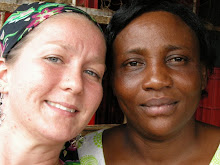

 Posts
Posts


